Aluminum gutters usually last somewhere from 20 years to 40 or more, going by the life-expectancy chart InterNACHI publishes for home inspectors (InterNACHI life expectancy chart). Steel runs shorter and copper far longer. How the gutters get treated moves the number more than the material does.
How long does each kind last?
| Gutter | InterNACHI's estimate | What to know |
|---|---|---|
| Aluminum | 20 to 40+ years | Usually formed on site into one-piece runs; dents if a ladder leans on it |
| Galvanized steel | 20 years | Heavier; rust starts at scratches and seams |
| Vinyl | 25+ years | Cheap and easy to hang; gets brittle in a cold snap |
| Copper | 50+ years | Uncommon on a typical house; weathers from shiny to brown to green |
InterNACHI says its figures assume regular maintenance and normal wear, and that real life varies with weather, installation, upkeep and the quality of the material. Read the chart as a rough guide for your own house.
Why do gutters around here wear out early?
Water and weight. The 1991 to 2020 normal at McGhee Tyson Airport is 51.93 inches of precipitation a year, with 14.3 days a year at an inch or more (NOAA normals). On those days your gutters are carrying a lot of water off the roof.
Then add trees. Wet leaves and pine needles are heavy, and a clogged gutter holds water that should have run off. That weight pulls on the hangers in each storm. Standing water also sits on the seams and corners, which is where sealant gives out and steel starts to rust.
Ladders do the rest. A ladder leaned against an aluminum gutter dents it and pulls the back edge off the fascia, a little more each time.

What are the signs yours are done?
Some of these are one-off repairs. When you see several at once, the whole system is near the end.
- Runs that sag between hangers or pull away from the fascia.
- Joints and end caps that drip during a rain even after a cleaning.
- Peeling paint on the fascia behind the gutter, or wood that goes soft when you push a screwdriver in.
- Rust lines, pinholes or cracks, especially at the corners.
- Water standing in the middle of a run a day after the rain, which means the pitch is off.
- A trench in the mulch bed under the drip line, or mulch washed out onto the lawn.
- Dirt splashed up the siding, or a damp spot in the basement on that same side of the house.
The washed-out mulch is the one people miss. It tells you water comes over the edge in the same spot each storm, right next to your foundation.
Can you repair them instead?
Often, for a while. A dripping joint can be resealed. A loose hanger can be replaced or moved over into solid wood. A sagging section can be re-pitched so it drains toward the downspout again. Those are small jobs.
When the fascia behind the gutter has rotted, a repair won't hold, because the screws have nothing to bite into. The wood has to be fixed first, and then the gutter goes back up on sound board.
What about the downspouts?
They carry the same water and wear the same way, plus a few ways of their own. The bottom elbow takes hits from mowers and kids' bikes and gets crushed. Joints between sections come apart, and a downspout that empties into an underground drain can back up without you seeing it. When gutters get replaced, the downspouts usually go with them so the sizes and colors match.
Should you replace gutters when you replace the roof?
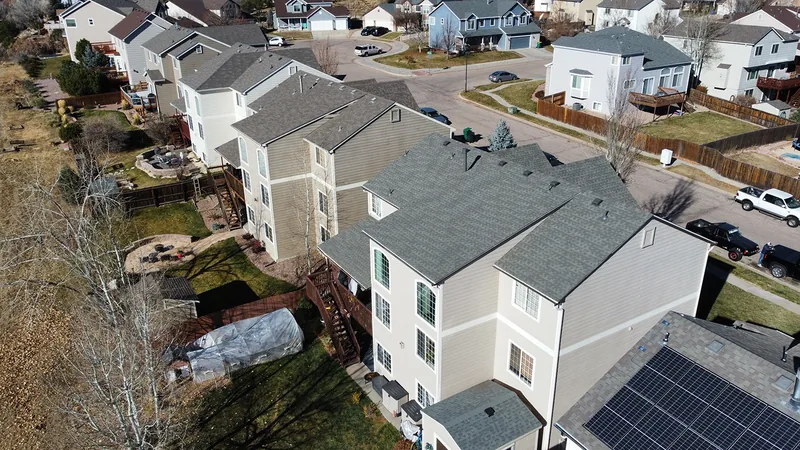
Our take: if your gutters are past the middle of that range when the roof comes off, replace them in the same job.
The roof edge is where the two systems meet. Drip edge goes on at the eave and the gutter hangs just under it. Any rotted fascia is easiest to find and fix with the gutters down. Doing the roof now and the gutters in a few years means working that same edge twice. If your gutters are fairly young and solid, they can usually stay.
How do you make gutters last longer?
- Clean them on the trees' schedule. Here's when to clean gutters under East Tennessee trees.
- Keep ladders off the gutter itself. A standoff bracket lets the ladder rest on the roof edge instead.
- Put an extension or splash block at the bottom of each downspout so the water lands away from the house.
- Under heavy leaf or needle fall, look at gutter guards. Which type works depends on the tree.
- If a run overflows even when it's clean, it may be too small for the roof above it. Here's K-style versus half-round, and when to go up a size.
When it's time, our gutter page covers replacement gutters and the choices you'll have.
Questions
Do one-piece gutters last longer than sectional ones?
They have far fewer joints, and joints are where sectional gutters usually start dripping. The metal itself ages about the same.
Can I paint old aluminum gutters instead of replacing them?
You can, and it helps the looks. Paint won't fix a sag, a bad pitch or rotted fascia behind the gutter, though.