If the damage is on the face of the siding, you can usually repair it. If the problem is inside the wall behind it, or you can't match what's already on the house, you're probably looking at replacing at least that wall. That's the short answer. The rest of this is how to tell which one you've got.
Is it a cracked panel or a wet wall?
A crack from a rock thrown by the mower, a hole from a hailstone, a panel that blew loose in a storm: those are repairs. A siding installer can unlock a vinyl panel, slide a replacement in and lock it back without disturbing the rest of the wall. Fiber cement boards and wood clapboards can be cut out and replaced one at a time too. If a hailstone went through a panel, look at the gutters and the shingles on that side of the house as well, since the same storm hit them.
Rot is a different problem. The sheathing and framing behind the siding can soak up water for years before anything shows outside. Press on the siding near the bottom of the wall and around the windows, especially anywhere the gutters overflow. If it feels soft or gives under your hand, something behind it is wet.
Signs the trouble is behind the siding:
- Paint peeling or bubbling on the inside of an outside wall
- A musty smell in one room that never quite goes away
- Swollen or soft trim around windows and doors
- Mildew that comes back through the siding no matter how often you wash it
Why does rot change the answer?
Because you can't fix it from the outside. When the siding comes off and the sheathing underneath is soft, it has to be cut out and replaced, and the siding goes back over sound wood. Patching the face of a wall that's wet behind it hides the problem for another season and lets the damage spread.
Water inside a wall can also mean mold where you can't see it. The EPA notes that mold can hide on the back side of drywall and inside walls around pipes, and it says water-damaged areas should be dried within 24 to 48 hours to prevent mold growth (EPA). A wall that's been wet through a few winters is far past that.
Find where the water is getting in before you choose a fix. The usual suspects are missing flashing over a window, a gutter overflowing onto the wall, or a roof-to-wall joint that somebody caulked instead of flashing. Replace the siding without fixing the water, and you'll be back at that wall in a few years.
Can you match old vinyl?
This is where a lot of siding repairs fall apart. Vinyl fades in the sun, so a panel from the same maker in the same color name still won't look like the ones that have been baking on your south wall for years. Profiles get discontinued, too, so the exact shape and board width on your house may not be made anymore. Take a piece of the old siding with you when you go looking, or a clear photo with a tape measure across it. Matching by color name alone rarely works.
There are two honest ways around it:
- Borrow panels from a spot nobody sees, like behind a deck or on the back of the garage, use them for the repair, and put the replacement panels in the hidden spot.
- Replace a full wall from corner to corner, so the color change lands at a corner where your eye already expects a break.
Our opinion: we'd rather replace one whole wall than patch three panels that will never match. A patch that stands out from the street tends to bother people more than they expect, and it's the first thing you'll notice every time you pull into the driveway.
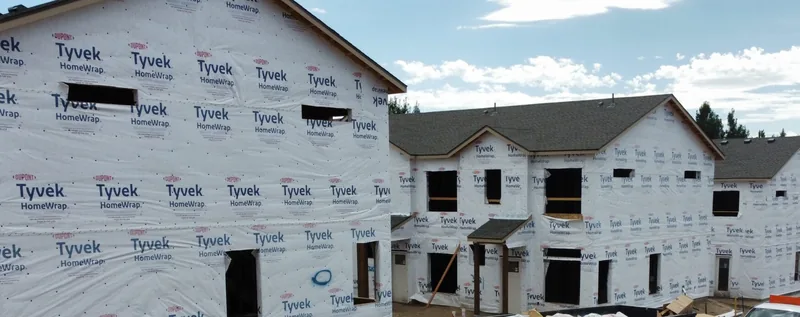
When is it time to replace all of it?
Replacing the siding on the whole house makes sense when:
- More than one wall has rot or soft spots behind it.
- You're fixing loose or storm-damaged panels every spring.
- The vinyl has gone brittle and cracks when someone tries to unlock a panel for a repair.
- You want insulation behind the siding, or a different look, and the old siding is near the end anyway.
Our post on six signs your siding is done goes deeper on what worn-out siding looks like. If you're weighing materials, read vinyl siding pros and cons before you get prices. The siding page covers what a replacement includes, from tear-off to trim.
Questions
Is it worth repairing siding before I sell?
For small damage, usually. A cracked or missing panel is an inexpensive fix, and it's the kind of thing that shows up on a buyer's inspection report. Rot is worth fixing too, but have it opened up and looked at first so you know how far it goes.
Can I replace the siding on just one side of the house?
Yes. The trick is ending the change at a corner, so the line between the old siding and the replacement isn't in the middle of a wall.