Most roofs don't leak through the middle of a slope. They leak where the shingles stop and something else starts: a pipe, a chimney, a wall, a skylight, the crease where two slopes meet. If you've got a drip and the roof isn't old, the problem is usually at one of six spots, and fixing it is a much smaller job than replacing the roof.
Water also travels before it shows up. It can get in at a pipe boot, run along the top of a rafter, and stain the ceiling across the room. So a stain tells you roughly where to look, not the exact spot.
1. Pipe boots
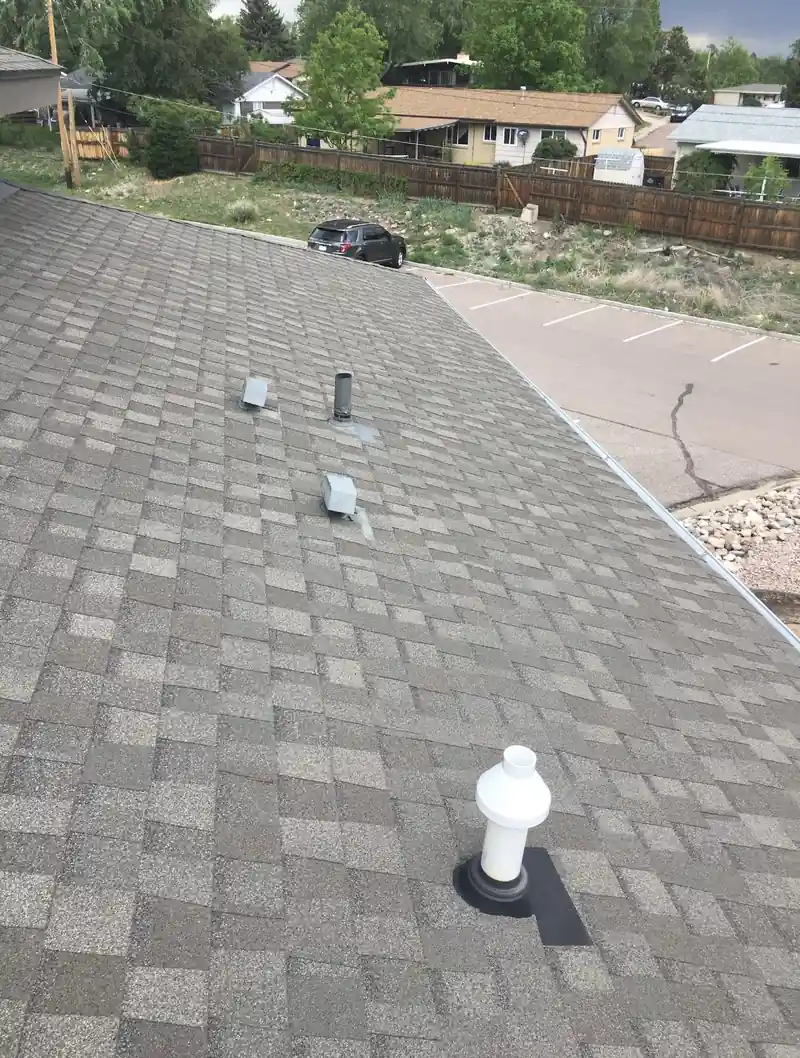
Every plumbing vent that comes through your roof wears a boot: a flashing base with a rubber collar that hugs the pipe. On a lot of roofs, the rubber gives out before the shingles do. The sun dries it out until it cracks and pulls away from the pipe. Then water runs straight down the pipe into the attic.
Here's our opinion. If you've got a mystery drip in a bathroom or hallway ceiling and the roof still has its original boots, check the boots before anything else. Swapping a boot is a small repair, and it's worth doing all of them at once while someone's up there.
2. Valleys
A valley is the crease where two roof slopes meet, so it carries the water from both of them at once. Leaves and pine needles collect there and hold water against the shingles. On some roofs the valley was cut short or nailed too close to the center line, and those nails turn into the leak.
Valley leaks tend to show up in long, hard rains, often at an inside corner of a room. Keeping the valley clear helps. A valley that was put together wrong has to be rebuilt, which means pulling shingles on both sides and laying it again over a metal or membrane liner.
3. Chimneys
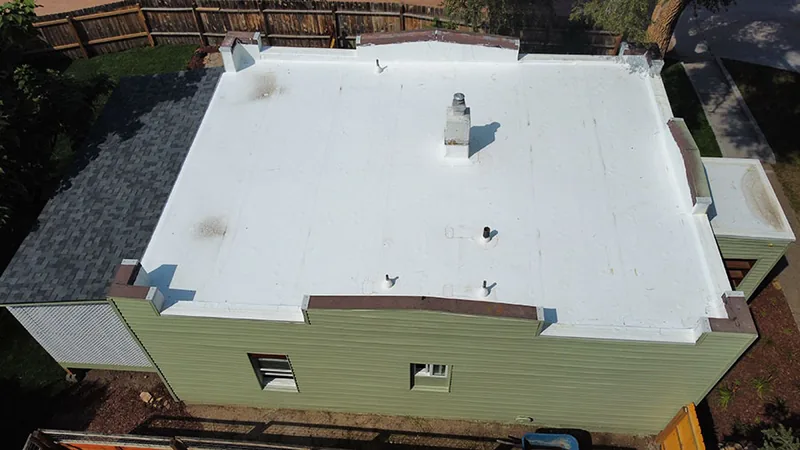
A chimney has four sides of flashing, and any of them can let water in. Step flashing runs up the sides, woven under each course of shingles. Counter flashing covers it and is set into the mortar joints. On a wide chimney, a small peaked diverter called a cricket sits on the uphill side and pushes water around it.
The usual failures are caulk used where flashing should be, counter flashing that has worked loose from the mortar, and brick or mortar that soaks up water on its own. That last one isn't a roof problem, and roofing work won't stop it. Our chimney repair page covers the flashing and the masonry side.
4. Walls and dormers
Anywhere a roof runs into a wall, like a dormer or a second story above a porch roof, the same step flashing does the work. The difference is that it's tucked behind the siding where you can't see it. If someone caulked that joint instead of lapping the flashing under the siding, water gets behind the siding and runs down inside the wall. You'll see it as a stain at the top corner of a wall or peeling paint on the trim below.
The fix usually means taking off the bottom row of siding along that wall to get at the flashing, then putting it back.
5. Skylights
Skylights leak two ways. The flashing kit around the frame fails, the same way a chimney's does. Or the unit itself gives out: the seal around the glass breaks down or the frame cracks.
Condensation can fool you, too. In winter, warm, damp air from a bathroom or kitchen hits the cold glass and drips back down, and it looks just like a leak. If it only drips on cold mornings and never during a rain, that's probably what you're seeing.
If the skylight is old and the roof is due, replace the skylight with the roof, since the flashing comes off either way. Our skylight repair page goes through repair versus replacement.
6. Vents and the roof edge
Every vent on the roof, from the ridge vent to the bathroom fan cap, has flashing or a seal. Wind-driven rain can blow up under a ridge vent that's the wrong type for the roof or was cut wrong. Exhaust caps get bent and lose their flaps.
At the bottom edge, the trouble is usually the gutters. When they clog, water backs up under the first course of shingles and rots the decking and fascia at the eave. That one tends to show up outside before it shows up inside, as peeling paint on the fascia or a soft spot along the eave.
What does a leak repair cost next to a roof?
Less, by a wide margin. A full asphalt shingle replacement on a Knoxville-area home usually runs $15,000 to $30,000. A boot, a run of step flashing or a reflashed skylight is a repair, priced for a few hours of work and some materials.
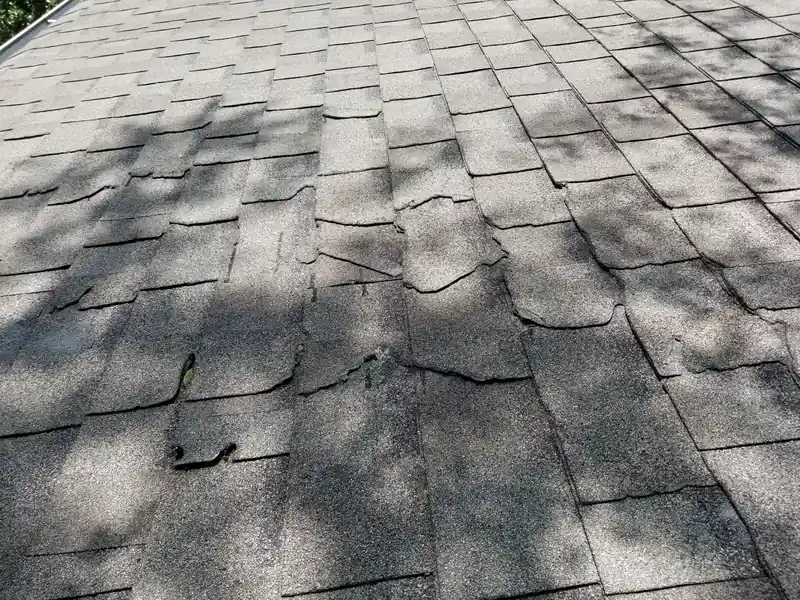
Repair stops making sense when the leaks come from the shingles themselves. If the granules are gone, the tabs are curling or cracked, and you've got more than one leak in different spots, you're paying to patch a roof near the end of its life. The money goes further on a roof replacement.
Don't let a slow leak sit
A small leak can drip into attic insulation for a long time before it stains a ceiling. By then the insulation is wet and the decking may be soft. The EPA says water-damaged areas and items should be dried within 24 to 48 hours to prevent mold growth (EPA). A slow leak never gives anything that long to dry.
If water is coming in right now, start with what to do when your roof is leaking. If it's slow and you can't find it, a free roof inspection is the place to start, with someone in the attic and someone on the roof tracing it back.
Questions
Why does my roof only leak in some storms?
Usually wind direction. Rain blowing hard from one side can push water under flashing or a ridge vent that stays dry in a straight-down rain. Note which way the wind was blowing when it leaked, because that helps whoever traces it.
Can I just caulk it?
As a stopgap until it can be fixed right, sometimes. Caulk dries out and cracks in the sun, and several of the failures above start as somebody's caulk fix. Flashing keeps water out because it overlaps, so a lasting fix restores the overlap.