A lot of the wind damage on East Tennessee roofs comes from ordinary thunderstorms, not tornadoes. The National Weather Service office in Morristown says damaging wind events happen fairly regularly across its area and account for a large portion of the damage thunderstorms cause (NWS Morristown severe weather guide).
When is storm season here?
Any month can bring a bad storm. The Morristown office says severe weather is most common in spring, March through May, and in summer, June through August. It counts 40 to 50 thunderstorm days a year on average across the southern Appalachians and the Tennessee Valley.
Spring is wet, too. The normal March rainfall at McGhee Tyson Airport is 4.89 inches, and April's is 4.71 (NOAA normals). Soaked ground makes it easier for a gust to tip a tree or snap a limb onto the house.
What straight-line wind is
Straight-line wind blows out of a storm in one direction instead of spinning. One kind is the downburst. Rain-cooled air drops out of the storm, hits the ground and spreads out sideways. NWS Morristown says these winds aren't tied to a tornado's rotation but can do as much damage as a weak tornado, and that thunderstorm winds can reach 100 to 120 mph.
The same guide counts a storm as severe when its winds top 58 mph. You don't need a severe warning to lose shingles, though. An older roof whose seal strips have dried out can lose a few in a gust well under that.
What wind does to a shingle
Shingles are held by nails and by a strip of sealant that bonds each one to the shingle below it. Wind works on the edge.
- The seal breaks and the tab lifts. It may lie back down looking fine, but it isn't stuck anymore.
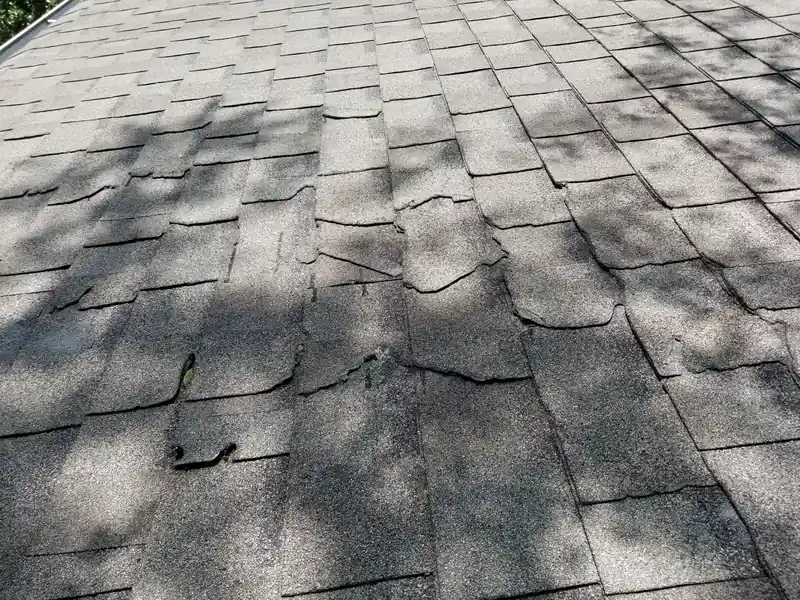
- A tab that flexes back far enough creases straight across. That crease is a weak line where the shingle will tear later.
- Shingles go missing, mostly at corners, along the rakes and at the ridge.
- Ridge caps peel back or blow off, since they sit up in the full wind.
- Flashing at walls and chimneys gets pried loose, and flying limbs punch holes.
The morning-after check from the ground
Our view: you can learn most of what you need from the yard with a pair of binoculars, and a wet roof the morning after a storm is a bad place to find your footing. Wait for daylight and go in this order.
- Look for downed power lines before you walk under anything. NWS Morristown says not to touch them or anything touching them, and to report them to the police and the power company. Watch for exposed nails and broken glass on the ground, too.
- Walk the yard. You're looking for shingle pieces, strips of ridge cap, bent flashing and a pile of granules at the bottom of a downspout.
- Use the binoculars on each slope, starting at the ridge and working down to the edges. A patch that's a different color often means shingles are gone and underlayment or bare wood is showing.
- Look for tabs that sit up or ripple, and creases running across shingles.
- Check gutters and downspouts for spots that are bent or pulled loose.
- Go inside. Look at the ceilings on the top floor. If you can get into the attic safely, use a flashlight and look for wet wood or daylight.
- Photograph what you find, with the date showing.
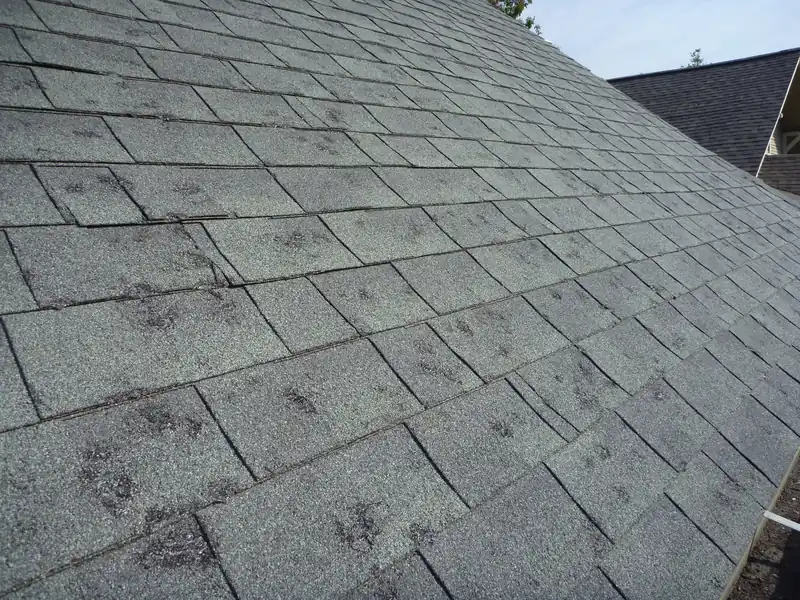
Wind or hail?
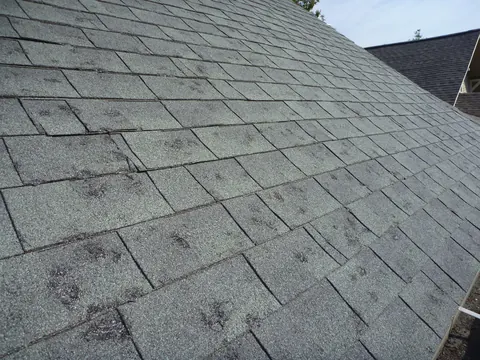
Wind lifts and creases shingles and tears them off at the edges. Hail leaves round bruises across the face of the slope that faced the storm, plus dents in soft metal. A spring storm can bring both at once. Here's what hail does to shingles and what to photograph.
What to do if you find damage
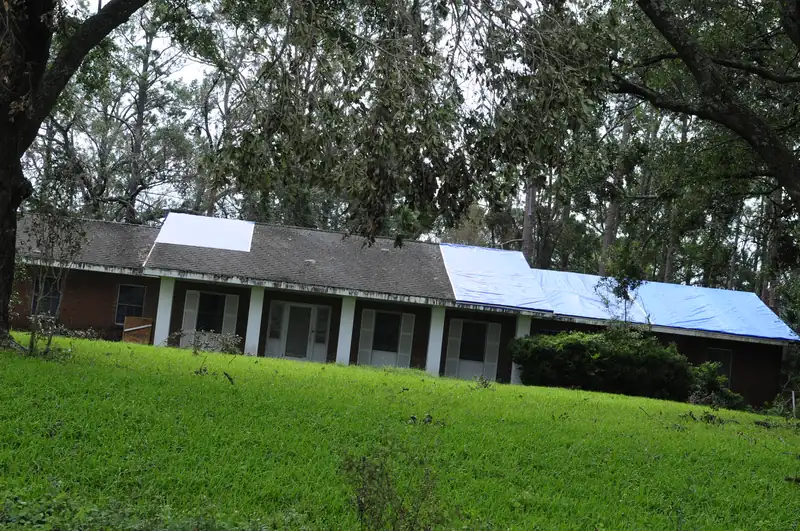
A missing patch needs covering before the next rain. Get it tarped or patched, and keep the receipt. Our emergency repair page explains the 24-hour line and what a temporary repair looks like.
For lifted or creased shingles with no leak yet, a free roof inspection will show if it's a repair or something bigger. If you live inside the city, our Knoxville page has the local details.
If you think it might be an insurance claim, photograph the damage before anything gets covered. Tennessee's Department of Commerce and Insurance tells people with storm damage to document it with photographs or video and to save receipts, including those for temporary repairs (TDCI storm recovery tips). So keep the tarp receipt with the photos.
Questions
Can a few lifted shingles wait?
Not for long. A tab that has lost its seal lets wind-driven rain get under it, and the next gust is more likely to tear it off.
Do I need a roofer out the same day?
If water is coming in, yes, at least for a tarp. If it's a few lifted tabs and the forecast is dry, a few days is usually fine.
Should I file a claim for a few missing shingles?
Compare the repair price with your deductible first, and talk to your agent. Your policy decides what's covered. Here's how roof insurance claims work.