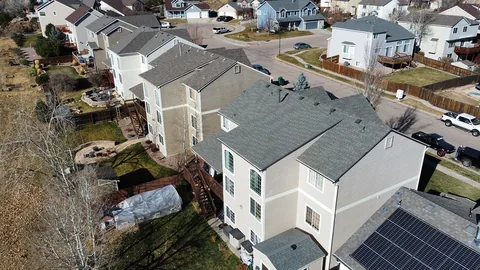
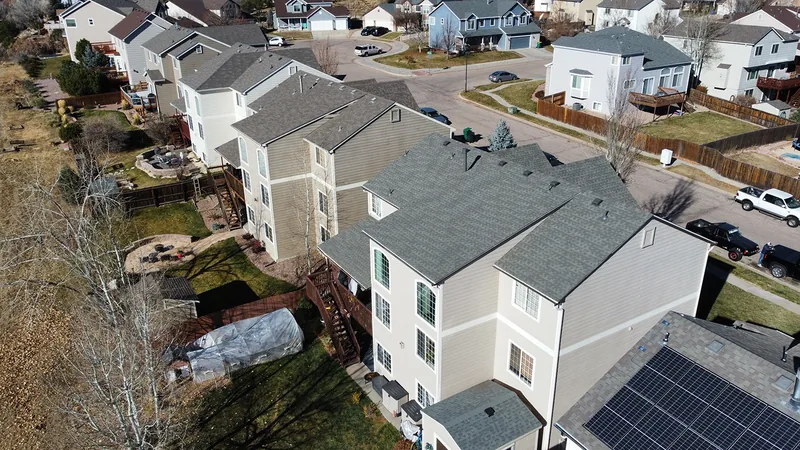
It's four in the afternoon in July. Downstairs feels fine. Upstairs, the back bedroom is stuffy no matter where you set the thermostat, and the ceiling is warm when you lay your hand flat against it. That warmth is coming through the roof, and what's happening in the attic decides how much of it reaches you.
How hot does it get here?
NOAA's climate normals for McGhee Tyson Airport, the 30-year averages from 1991 to 2020, put Knoxville's normal July high at 88.4 degrees and the normal July low at 68.7. July averages 12.9 days at 90 or hotter, and the whole year averages 36.5 of them. You can read the monthly normals and the yearly figures straight from NOAA.
The low matters as much as the high. A night that only drops into the upper 60s doesn't give an attic much time to shed the day's heat before the sun is back on it.
The roof runs much hotter than the air
Air temperature is where it starts. Your shingles live in direct sun, and dark roofing soaks up most of the light that hits it. Researchers at Berkeley Lab's Heat Island Group measured a black roof at 54 degrees Fahrenheit warmer than a white roof beside it on a summer afternoon (Berkeley Lab). The same lab notes that white roofing is mostly used on low-slope roofs you can't see from the street, so a typical sloped house roof sits a lot closer to the black end of that test.
That heat moves down into the plywood or OSB decking, and from there it radiates into the attic.
What years of summers do to shingles
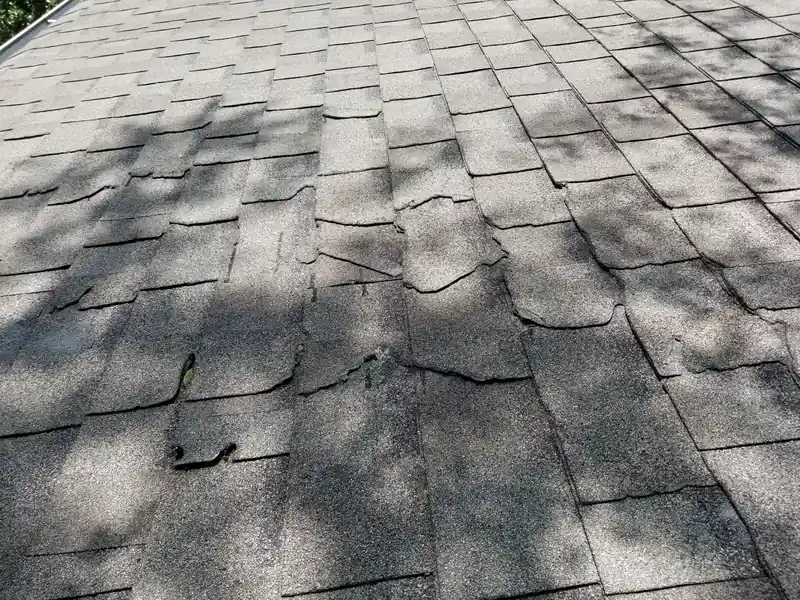
Asphalt shingles soften in the afternoon heat and stiffen again overnight. One summer of that won't show. Year after year, it wears on them. The asphalt slowly dries out and turns brittle. Granules, the small colored stones on top that shield the asphalt from the sun, loosen and wash into the gutters. Edges start to cup or curl, and a brittle shingle is more likely to crack when wind bends it back.
Heat by itself won't usually open a leak in July. It ages the shingles, so they're weaker when the next spring storm comes through.
A hot attic adds to it. The shingles get baked from above by the sun and from below by attic air that has nowhere to go.
Why the upstairs bedroom is the hot one
The attic floor is the ceiling of your top floor. If the attic is hot and the insulation on that floor is thin, settled or pushed aside, heat comes right through the drywall. Small gaps make it worse: around recessed lights, at the attic hatch, where plumbing and wiring pass through, along the tops of interior walls. Air moves through those gaps, and in summer it carries attic heat down with it.
ENERGY STAR says sealing air leaks and adding insulation can save up to 10 percent on your annual energy bills, and it points to the attic as the place for the bigger jobs (ENERGY STAR). For a hot upstairs room, that's where we'd start looking before blaming the shingles.
Ventilation: air in low, air out high
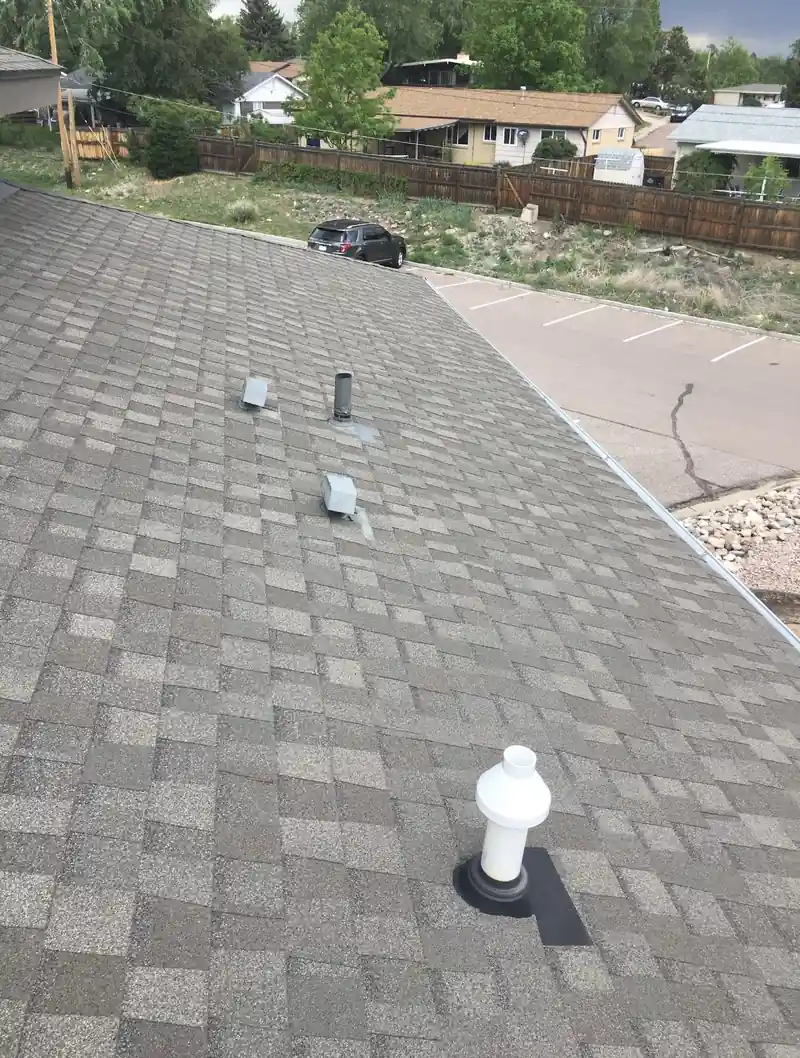
An attic breathes the way a chimney draws. Cooler outside air comes in through vents low on the roof, usually in the soffits under the eaves. Hot air leaves through vents high on the roof, usually a ridge vent along the peak or box vents near it. When intake and exhaust are roughly matched, air keeps moving through the attic all day long.
The trouble starts when one side is missing or blocked:
- Soffit vents painted over, or buried from the inside by blown-in insulation
- A ridge vent on top with almost nothing letting air in at the bottom
- Two kinds of exhaust on one attic, like a ridge vent plus gable vents, pulling air from each other instead of from the soffits
- Bathroom fans that dump warm, wet air into the attic instead of outdoors
Our opinion: we'd rather see a ridge vent with clear soffits than a powered attic fan. A fan that pulls hard on an attic pulls air from wherever it can get it. If the ceiling below has gaps, some of that air is air you already paid to cool.
Ventilation is a system, so judge it as one. Look at what lets air in and what lets air out before you add anything.

What you can check yourself
You don't need to climb onto the roof for any of this.
- From the yard, look up at the soffits. Solid panels all the way around can mean the attic has no intake at all.
- In the attic on a cool morning, look down at the eaves. The insulation should stop short of the roof deck, or there should be baffles holding a channel open for air.
- Find the ridge vent slot from inside. If insulation or debris is packed against it, it isn't moving much air.
- Follow the bathroom fan duct and make sure it ends at an outside wall or a roof vent, not in the insulation.
- Look at the underside of the decking for dark stains or rusty nail tips, signs that damp air is getting trapped up there.
Our once-a-year roof check from the driveway covers the outside half of this.
Does a lighter shingle help?
It lowers the temperature of the roof surface. How much of that reaches your rooms depends on the attic. Berkeley Lab's numbers show a cool-colored roof with 35 percent solar reflectance staying about 22 degrees cooler than a conventional roof at 10 percent. We get into color, cool-color shingles and algae in light or dark shingles in a Tennessee summer, and you can compare shingle lines on our products page.
When the roof is coming off anyway
If you're facing a roof replacement, that's the easiest time to fix ventilation. The decking is exposed, the ridge can be cut open for a vent, and intake can go in at the eaves while everything is apart. Ask for the quote to list the vents by type and count, so you can see the plan in writing.
Questions
Is a hot attic normal in July?
Yes. On a sunny day, an attic runs hotter than the air outside. What you want is air that keeps moving through it, and enough insulation on the floor that the heat stays up there.
Should I add a solar attic fan?
We'd fix the intake first. A fan without enough air coming in at the soffits ends up pulling from the house below.